ASML’s push for higher lithography-tool prices looks more like an attempt to capture technological value and scarce production capacity than a clear warning of weakening demand. But that does not make every proposed increase an automatic earnings gain.
In July 2026, chief financial officer Roger Dassen said ASML had room to improve pricing, supported by stronger demand and EUV production capacity that was nearly fully booked through the end of 2027. Separately, reporting described resistance from TSMC and acceptance by some Chinese customers of a 10% increase on certain DUV systems. That reported increase should not be treated as a universal price rise across ASML’s portfolio.
The distinction is important. Negotiated price increases, higher average selling prices, and expanding profit margins are three different things.
For investors, the question reaches beyond equipment contracts. Interest rates influence customers’ investment hurdles. Exchange rates change purchasing costs. Credit conditions determine which fabs can expand. Energy and other inputs affect whether higher revenue becomes higher profit.
ASML’s pricing story is therefore both a company-level opportunity and a window into the economics of semiconductor expansion.
What Kind of Price Increase Are We Discussing?
A higher equipment price can mean several things.
It may be a like-for-like increase on an existing configuration. It may reflect greater productivity, improved performance, or additional functionality. Alternatively, average selling prices can rise simply because customers buy a more expensive mix of systems.
Those mechanisms should not be combined indiscriminately.
A genuine price increase on otherwise unchanged equipment can improve margins if costs remain stable. A higher price for an upgraded system may accompany additional manufacturing costs. A richer shipment mix may increase revenue without improving the profitability of each product.
ASML has emphasized value-based pricing, linking the price customers pay to the economic benefit its systems deliver.
That approach is more sophisticated than charging more because customers have limited alternatives. Its durability depends on the value being real.
The Customer Buys Productivity, Not Just a Machine

From a fab manager’s perspective, the relevant price is not necessarily the invoice total. It is the cost of producing usable wafers.
A tool with higher throughput, better availability, or improved process performance can justify a higher purchase price if it reduces manufacturing costs or increases productive output.
This is why productivity improvements strengthen ASML’s negotiating position.
However, customers evaluate the complete economics: installation, service, utilities, staffing, qualification, and the number of acceptable wafers produced over the equipment’s life.
A more expensive machine is attractive only if those benefits exceed its additional cost.
The strongest pricing argument is therefore not scarcity alone. It is a combination of scarce access and improved customer economics. Scarcity can support a negotiation; productivity can make the agreement commercially defensible.
Why Higher Prices Do Not Immediately Mean Higher Margins
Pricing benefits arrive on a timetable.
Lithography systems have long order and manufacturing lead times. New commercial terms may affect future deliveries rather than the next quarter’s reported revenue.
Meanwhile, costs can change before those prices appear in earnings. Suppliers may charge more, engineering requirements may increase, and new product generations may initially be expensive to manufacture.
ASML’s second-quarter 2026 results provide a useful caution. It reported EUR 9.3 billion in sales and a 54% gross margin, but attributed the better-than-guided performance primarily to stronger Installed Base Management sales—not simply to newly negotiated system prices.
A margin improvement can therefore have several sources: pricing, product mix, service contributions, manufacturing efficiency, or cost movements.
Investors need a bridge between those drivers before crediting every improvement to pricing power.
Installed Base Management Changes the Earnings Mix
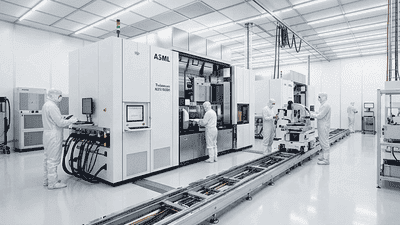
ASML does more than deliver new systems. Its installed equipment creates ongoing demand for service, upgrades, and other support.
This business can give customers a way to improve existing production assets without committing to an entirely new factory expansion.
For ASML, it adds another source of revenue and can influence gross-margin performance.
The distinction matters when interpreting the cycle. Strong upgrade and service activity may coexist with uneven demand for new equipment. Conversely, an aggressive new-fab investment wave may change the balance between system sales and installed-base revenue.
Neither pattern is automatically good or bad. The economic significance depends on profitability, customer utilization, and the sustainability of demand.
In other words, ASML’s earnings should not be reduced to the number of new machines multiplied by a headline selling price.
Interest Rates Raise the Customer’s Hurdle
A lithography purchase is part of a much larger manufacturing investment. Its financial attractiveness depends on the expected cash flow of the whole project.
Higher interest rates increase borrowing costs and the returns investors require. They also make distant future earnings less valuable today.
A customer can therefore recognize a tool’s technical benefits and still delay its purchase because the factory’s overall financial case has weakened.
This is particularly relevant when higher equipment prices coincide with higher construction or operating costs.
Lower rates can improve the calculation, but they cannot create customer orders for chips or resolve process-development problems.
ASML’s strongest customers may have substantial internal funding. Nevertheless, their investment decisions still face opportunity costs. Cash-rich companies also compare a new fab with other uses of capital.
Credit Conditions Separate Strong Buyers From Fragile Ones
Benchmark interest rates do not tell the entire financing story.
Credit spreads, lending terms, balance-sheet strength, and access to long-duration capital determine which projects can proceed.
An established manufacturer with predictable cash generation may absorb a tool-price increase more easily than a new entrant still assembling its financing.
Government support can help, but a subsidy does not necessarily cover cost overruns, working capital, or a slow production ramp.
From a credit analyst’s viewpoint, the important question is whether the customer can fund the period between equipment payment and dependable operating revenue.
That is why a strong equipment backlog deserves close examination rather than blind acceptance. Delivery schedules, customer funding, installation readiness, and production plans all affect how commitments become recognized sales.
The Euro Can Amplify—or Offset—the Price Increase
ASML reports in euros, while its customers operate across several currency zones.
Where contracts or payments are euro-denominated, a stronger euro can increase the customer’s local-currency purchasing cost. A weaker euro can offset part of a nominal price increase.
But the effect depends on actual contract terms, payment timing, and hedging.
ASML also has international suppliers and operations. Currency movements can affect its own costs, not just customer affordability.
Consequently, a headline price increase and the customer’s effective cost increase may differ substantially.
This is especially important when exchange rates move between order placement and payment. The financial burden can change without any renegotiation of the equipment’s euro price.
A sound analysis separates commercial pricing from currency translation rather than attributing both to stronger pricing power.
Commodities Matter Through the Supply Chain
Lithography is a precision-engineering business, not a simple commodity business. Yet it is connected to energy, materials, logistics, and manufacturing costs.
ASML’s suppliers require specialized facilities, skilled labor, and reliable inputs. Rising costs can eventually pass through into the price of components and assemblies.
The sensitivity is not equivalent to that of a bulk metal producer. Technical capability and qualification often matter more than the market price of raw materials.
Still, the basic margin equation remains relevant: higher selling prices create less benefit when input costs rise alongside them.
Customers face a parallel problem. Their factories need electricity, gases, chemicals, and supporting infrastructure. More expensive lithography is only one element of a broader cost stack.
The macro question is whether the complete manufacturing economics remain attractive—not whether the tool price alone has increased.
Customer Resistance Is Not Automatically a Demand Collapse
Reports of pushback from a major customer can sound ominous. They can also describe ordinary negotiation between sophisticated companies.
A buyer has every reason to challenge higher prices, even when it needs the equipment urgently. A supplier has every reason to seek more compensation when productivity and demand support its case.
The reported TSMC resistance therefore does not, by itself, establish weakening demand.
Equally, ASML’s pricing ambitions do not prove that customers will accept all proposed terms.
The useful evidence is what happens afterward: agreed prices, delivery commitments, investment schedules, and actual shipments.
Negotiation becomes a demand warning when it is accompanied by material postponements, cancellations, deteriorating utilization, or weakening customer economics—not merely when a powerful buyer refuses the opening proposal.
When Would the Bearish Interpretation Be More Convincing?
The demand-warning case would strengthen if higher prices appeared to compensate for weakening unit demand.
It would also gain credibility if customers reduced expansion plans while ASML relied increasingly on price assumptions to support revenue expectations.
Other warning signs would include slower delivery conversion, excess capacity at customers, or rising costs that prevented price increases from improving profitability.
None of those outcomes follows automatically from a pricing announcement.
In July, ASML’s stated capacity constraints and stronger outlook pointed in a different direction. The company increased its full-year 2026 sales forecast to EUR 43–45 billion, with gross-margin guidance of 54–56%. Those were forecasts, not completed full-year results.
The current evidence supports a pricing-opportunity interpretation more strongly than a demand-collapse interpretation, while leaving execution risk unresolved.
Pricing Power Can Redistribute Industry Returns
If ASML captures more value, some of that value may come from its customers’ manufacturing returns.
Customers can respond by seeking productivity gains, raising wafer prices, adjusting investment schedules, or accepting lower profitability.
Whether the cost moves downstream depends on competition and demand. A foundry cannot necessarily pass through every increase simply because an upstream supplier has pricing power.
This creates a chain of negotiations across the semiconductor economy.
Equipment pricing influences fab costs. Fab economics influence wafer pricing. Chip costs influence the economics of servers, devices, and other systems.
The transmission is neither immediate nor one-for-one, but it explains why a lithography pricing decision matters beyond ASML’s income statement.
A Practical Investor Scorecard
The central analytical requirement is conversion: turning pricing discussions into profitable, delivered revenue.
A useful scorecard would track:
- Realized pricing separately from shipment-mix changes.
- Unit deliveries and customer investment schedules.
- Cost growth relative to selling-price improvement.
- Installed-base contributions to revenue and margins.
- Currency effects on both customers and ASML.
- Backlog conversion into installation and customer production.
This approach avoids two common mistakes: assuming every higher average selling price is pure profit, and assuming every customer objection signals a downturn.
It also recognizes a valuation risk. A strong business can still disappoint investors if expected pricing gains are already embedded in the share price and arrive more slowly than anticipated.
The Verdict: An Opportunity, Not a Free Lunch
ASML’s effort to raise lithography prices is best read as an attempt to monetize stronger demand, constrained capacity, and improved tool value.
The evidence does not make it a straightforward demand warning. Nor does it guarantee immediate margin expansion.
The outcome depends on negotiated terms, delivery timing, manufacturing costs, customer financing, and the productivity those customers actually obtain.
For investors, the most revealing question is not simply whether ASML can charge more. It is whether the semiconductor ecosystem can support those prices while continuing to invest, manufacture competitively, and generate acceptable returns.